Why Horde Transport Feels So Bad — and Why Alliance Feels Better
For many World of Warcraft players the difference between Horde and Alliance travel is as obvious as the difference between a beaten-up pickup and a luxury sedan. The Horde's transport options — zeppelins, rough-hewn ships and sometimes clunky mounts — are designed to feel thematic and rugged. That design choice, however, often produces a user experience that players describe as slow, awkward or unreliable. The Alliance, by contrast, benefits from sleeker animations, clearer routes and a perception of polish.
Key reasons players complain about Horde transport:
1. Art direction and scale
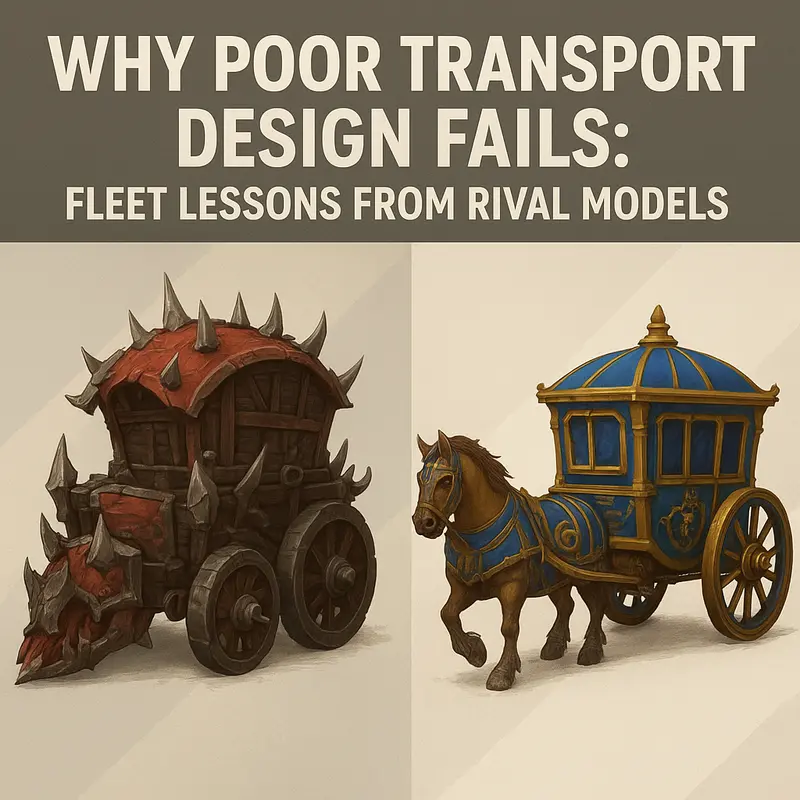
The Horde aesthetic prioritizes raw, imposing vehicles: hulking zeppelins, warships patched together from scavenged parts and heavy land mounts. Those designs read as immersive, but their bulk translates into slower, lumbering animations and camera angles that can feel clumsy in motion.
2. Audio and animation polish
Small details like engine/rope sounds, boarding animations and NPC calls shape perceived smoothness. Alliance transports have historically featured crisper sound cues and smoother flight animations, which convinces players they’re faster and more reliable—even when travel times are similar.
3. Network of routes and spawn points
Perception of convenience matters. If a faction's hubs are spaced awkwardly or a transport node spawns in an inconvenient place, players feel penalized. Alliance hubs often line up with population centers and quest flow, reducing perceived downtime.
4. Historical bugs and timing
Longstanding bugs (missing zeppelins, pathing quirks) leave impressions that outlast fixes. Players remember being stuck or waiting, which reinforces the "Horde transport is bad" narrative.
How this maps to automotive industry insights
Design vs. usability
Auto manufacturers balance brand-specific styling with ergonomics and reliability. A rugged off-roader can be less refined on the road, just as Horde ships emphasize theme over smoothness. Players equate aesthetic grit with mechanical roughness—similar to judging a vehicle by its ride quality, dashboard layout and acceleration.
Perceived quality = perceived reliability
In cars, sound insulation, fit-and-finish and predictable controls create trust. In WoW transport, crisp animations, consistent spawn behavior and clear audio cues build the same trust. The Alliance benefits from that perceived quality even when objective metrics (travel time) are comparable.
Maintenance and telemetry
Automotive brands use diagnostics and service networks to reduce downtime. In MMOs, frequent fixes, better UI for travel and transparent schedules are the equivalent. Where those are present (or at least visible), players feel better about the transport system.
What players and designers can do
Players
Use addons that show transport timers, learn optimal routes, and take advantage of portals, hearthstones or faction-aligned flight paths to minimize dependence on thematic transports.
Designers
Keep the Horde aesthetic but refine animations, audio and spawn logic. Small improvements in timing, camera framing and sound design deliver disproportionate gains in perceived polish—like adjusting suspension tuning in a vehicle to transform ride quality without changing the brand identity.
Bottom line: Horde transport is often criticized not because it’s fundamentally broken, but because its design choices emphasize theme over ergonomic polish. The Alliance wins the comparison when polish, route convenience and perceived reliability align—lessons both game designers and auto engineers know well.
If you have any questions or would like help exploring your options, I’d be happy to help. Feel free to reach out anytime for more information or to take the next step when you’re ready.
The Emperor of Mans
(326) 999-0120
Build-A-Brand Motors