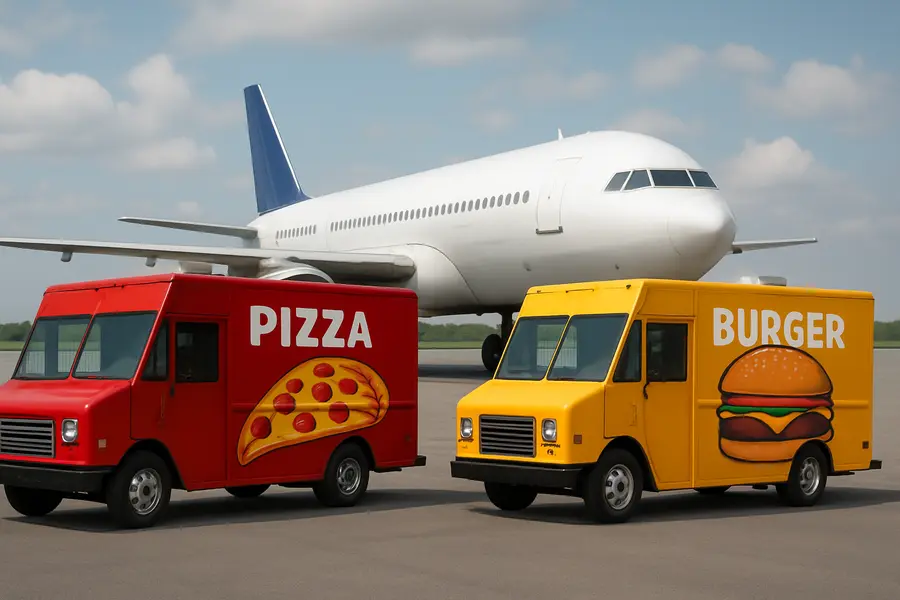
Pizza mobile vs. Burger mobile — a quick framing
Both pizza trucks and burger trucks are variants of the mobile food business built on automotive platforms. They share core requirements: a reliable chassis, efficient power for cooking and refrigeration, thoughtful weight distribution, and compliance with health and vehicle regulations. Yet their equipment, layout and business economics diverge in ways that matter to owners, fleet managers and upfitters.
Key automotive differences
Chassis and GVWR: Pizza operations often need heavier ovens and ventilation systems. That pushes owners toward higher GVWR platforms (cutaway vans, step vans or light-duty box trucks). Burger mobiles can sometimes fit in lighter vans if cooking equipment is compact.
Power and ventilation: Wood or stone ovens require robust power and thermal management; gas griddles for burgers need exhaust hoods and grease traps. In both cases, auxiliary power units or generators (or integrated inverter systems on electric vehicles) are major considerations.
Upfit and payload: Commercial upfits typically range from modest modifications to $20k–$100k+ depending on stainless steel work, appliances, plumbing and HVAC. Payload planning is critical: water tanks, fuel, and equipment add weight that affects braking, tire selection and suspension choices.
Operating economics & fleet insights
Fuel type and drivetrain matter. Diesel remains common for heavy-use trucks because of torque and range, but electrification is growing for short-range urban routes to reduce emissions and operating cost. Maintenance frequency increases with heat-intensive equipment; scheduled inspections of hoods, fire suppression, and exhaust systems should be part of fleet SOPs. Insurance and permitting are also major line items — different cities treat wood-fired ovens differently from standard gas grills.
Customer experience and branding
Pizza trucks often sell an experiential product — sights, smells, and high-margin specialty pies — which can justify larger capital outlays and premium pricing. Burger trucks can be faster for high-volume events, easier to standardize across a fleet and simpler to train staff on.
Why a plane can be "better" — but only in niche cases
A plane outperforms ground vehicles on speed and range: it can reach remote regions, deliver mass catering across long distances, or support disaster response where roads are compromised. For corporate or experiential events, an aircraft can amplify brand prestige and logistical reach.
Trade-offs: Aircraft cost and complexity are orders of magnitude higher — acquisition, maintenance (A checks, hangarage), certified crew, and aviation regulatory compliance. Airports, ground handling and fuel logistics add cost and constraints that make a plane impractical for routine local food service.
When to choose which
Choose a pizza or burger mobile when you need repeatable, street-level presence, manageable capital costs, and flexible routes. Select airlift when mission-critical speed, remote access or a unique high-end experience outweighs the enormous operational and regulatory cost.
Bottom line
From an automotive and fleet-management perspective, pizza and burger mobiles are specialized but practical variants of commercial vehicles, each with distinct equipment and operating needs. An airplane can be "better" only for specific high-value scenarios that demand range and speed; for most food-service businesses, optimizing vehicle platform, upfit and powertrain delivers far greater return on investment.
If you have any questions or would like help exploring your options, I’d be happy to help. Feel free to reach out anytime for more information or to take the next step when you’re ready.
The Emperor of Mans
(326) 999-0120
Build-A-Brand Motors